
Particle Size Analyzer: How It Works and Why Your Laboratory Needs One
If you handle materials where particle size impacts quality or performance, understanding how a particle size analyzer works can change the way you approach your processes Particle Size Testing. These devices offer precise insights that go beyond basic measurement, helping you optimize formulations and maintain consistency. But knowing why your lab truly needs one means looking at more than just the technology—it’s about the value it brings to your day-to-day operations.
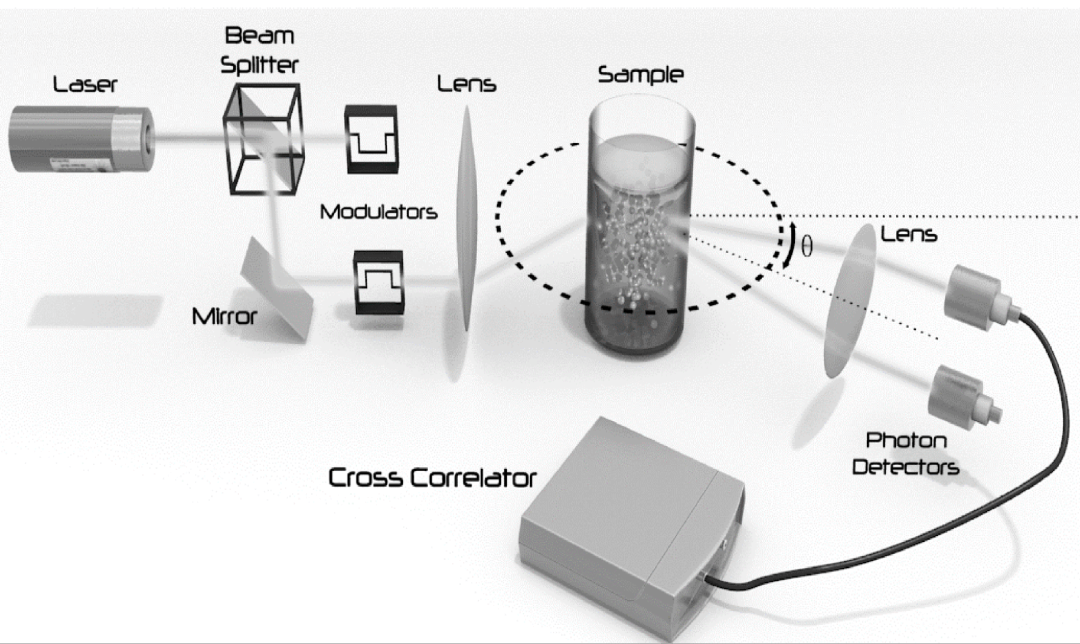
How Particle Size Analyzers Work
Although particle size analyzers come in various types, they all work by measuring how particles interact with light, sound, or fluid flow to determine their size. When you use one, you’re tapping into these interactions to get precise measurements quickly.
For example, laser diffraction sends a laser beam through your sample, then analyzes the light scattered by particles to calculate their size distribution Lab Alliance. Acoustic methods rely on sound waves passing through the sample, while dynamic light scattering detects fluctuations in light intensity caused by particle movement.
You don’t have to guess anymore—these instruments give you accurate data without hassle. By understanding how they operate, you’re free to make informed decisions without being tied down by uncertainty or complicated processes.
Why Particle Size Analyzers Matter in Your Lab
Understanding how particle size analyzers work gives you a clear picture of their capabilities, but knowing why they matter in your lab helps you see their true value. These devices empower you to make faster, smarter decisions by providing accurate particle size data essential for quality control and research.
You’ll avoid costly mistakes, optimize formulations, and improve product consistency. With precise measurements at your fingertips, you gain freedom to innovate confidently, rather than guess.
Plus, particle size analyzers save you time by streamlining analysis, freeing you to focus on other critical tasks. In short, they become an indispensable tool that boosts your lab’s efficiency, reliability, and ability to adapt—helping you stay ahead in a competitive environment without compromising on accuracy or speed.
Types of Particle Size Analyzers and Applications
When you choose a particle size analyzer, it’s important to match the technology to your specific needs, as different types excel in various applications. Laser diffraction analyzers offer fast, precise measurements for a broad particle size range, making them great for powders and suspensions.
Dynamic light scattering suits you if you’re working with nanoparticles or colloids, providing detailed insights at the nanoscale.
If you handle dry powders, sieve analyzers give you a straightforward, cost-effective option.
You might also consider image analysis systems, which let you see particle shape and size, adding an extra layer of valuable data.
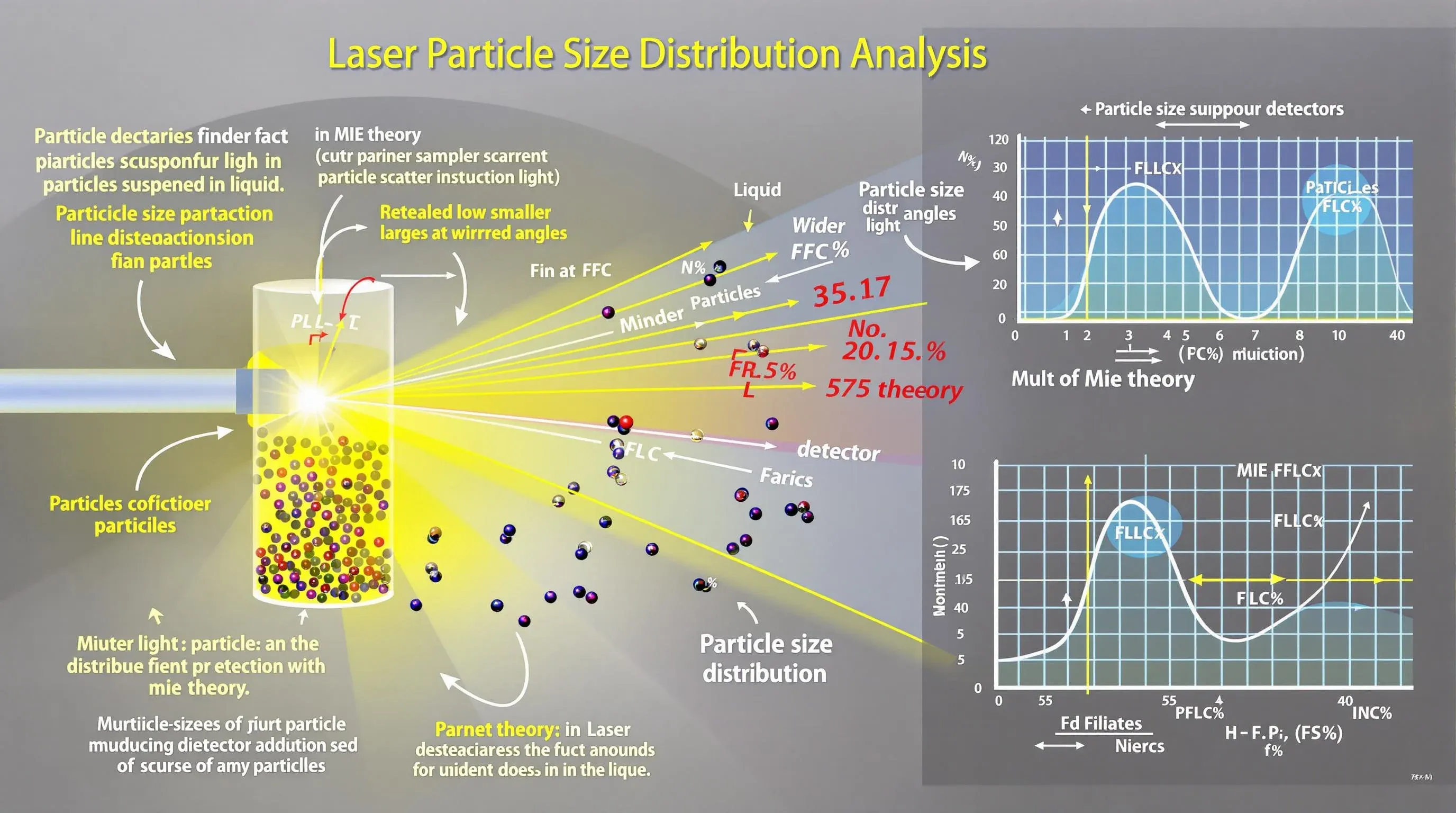
Choosing the Right Particle Size Analyzer
Selecting the right particle size analyzer means aligning the tool’s strengths with your specific sample and measurement goals. You want a device that handles your material’s characteristics—whether powders, suspensions, or emulsions—without compromising accuracy or speed.
Consider the size range you need to measure and the sample’s concentration. Optical systems excel in broad ranges, while laser diffraction suits finer particles.
Don’t overlook ease of use and data output formats, which affect how freely you can interpret and share results. Also, think about your workflow—do you prioritize quick measurements or detailed analysis?
Maintenance and Calibration Best Practices
To keep your particle size analyzer delivering accurate and reliable results, you need to perform regular maintenance and calibration. Start by cleaning the instrument’s components according to the manufacturer’s guidelines to prevent buildup that can skew readings.
Replace worn parts promptly to avoid downtime and maintain precision. Schedule calibration using certified standards that match your typical sample types; this guarantees your measurements stay trustworthy and consistent.
Don’t skip routine checks—monitor performance trends to catch issues early. Keep detailed logs of all maintenance and calibration activities; this not only helps with troubleshooting but also supports compliance if needed.
Conclusion
By adding a particle size analyzer to your lab, you’ll get faster, more accurate results that improve product quality and streamline your workflow. Understanding how these devices work and choosing the right type for your needs guarantees reliable data every time. Plus, with proper maintenance and calibration, you’ll keep your analyzer running smoothly for years. Investing in one saves you time, cuts costs, and boosts confidence in your research or production.